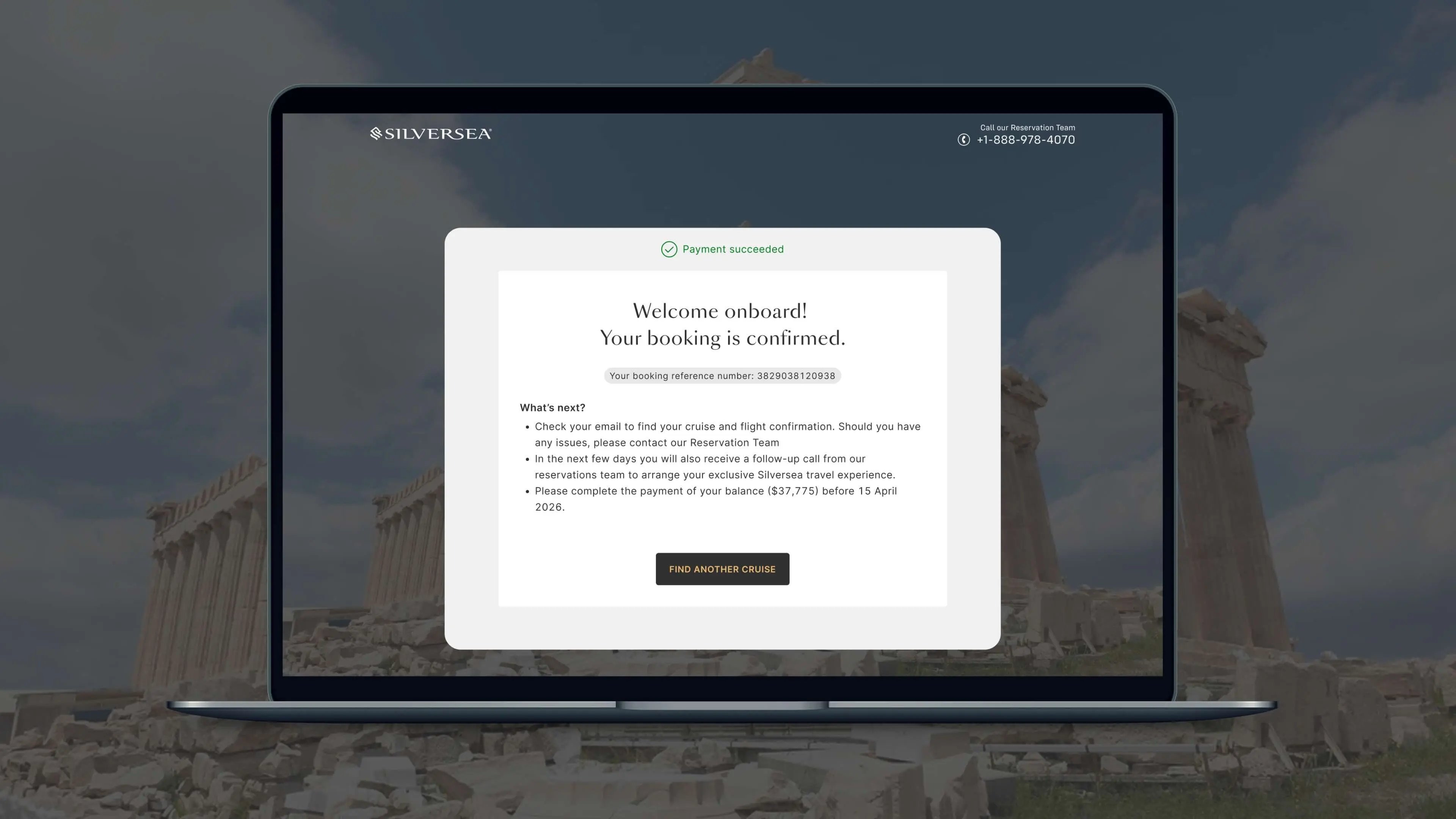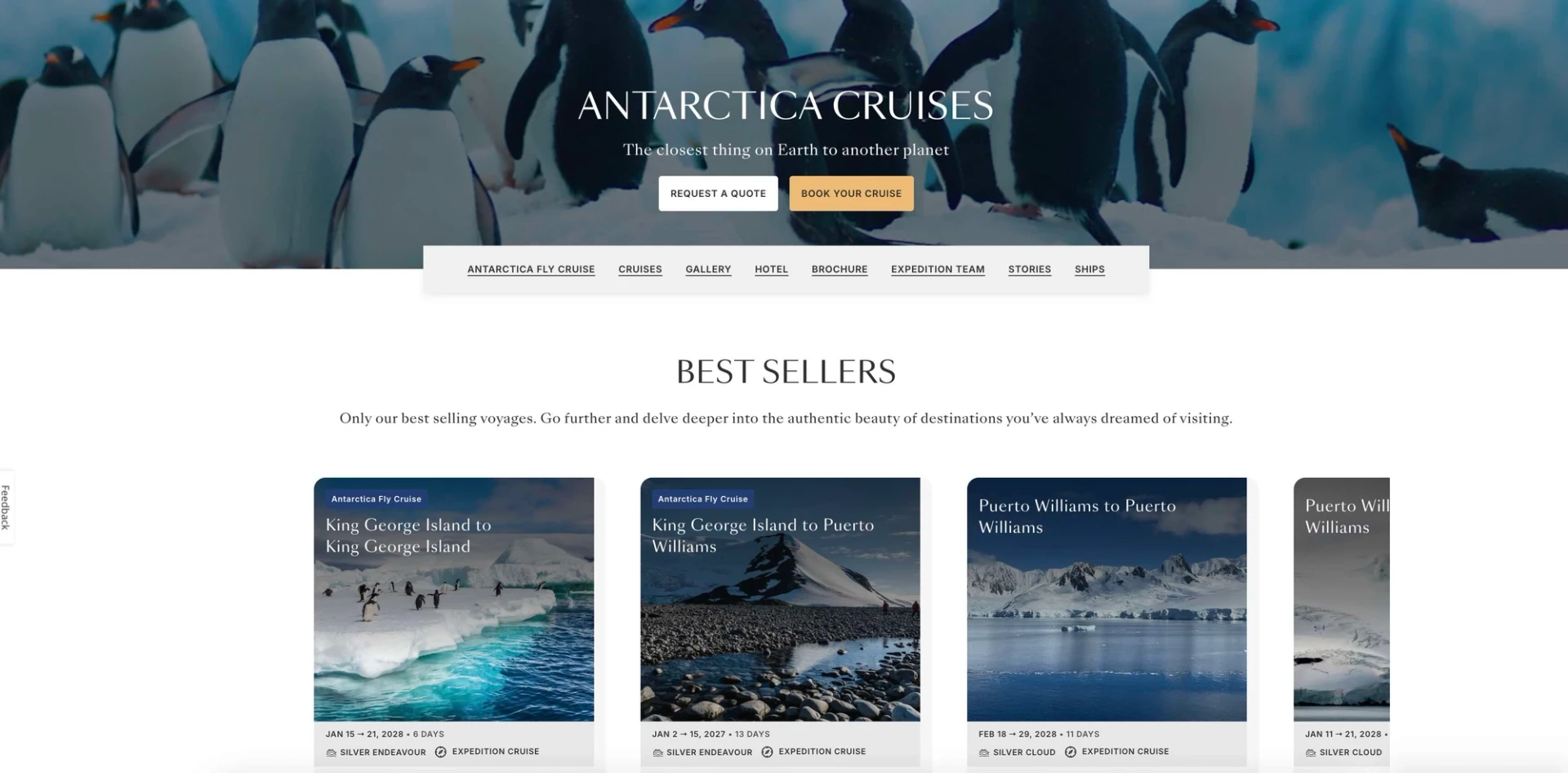
What we did
- Defined the vision for a new eCommerce experience centered on a cruise configurator.
- Designed and prototyped the end‑to‑end booking journey, from discovery to reservation.
- Launched an MVP in selected markets, then scaled globally in phased rollouts.
- Ran ongoing CRO experiments to optimize conversion, reduce drop‑off, and refine key flows.
OUTCOMES
OVERVIEW
Silversea, a global leader in ultra‑luxury cruises, wanted its digital channels to match the sophistication of its ships and onboard service. Yet the existing eCommerce journey was difficult to navigate: pricing was complex, options were hard to compare, and there were limited tools to support confident decision‑making on an expensive, once‑in‑a‑lifetime purchase.
The brief was clear: create a digital experience that simplifies complexity without diluting the feeling of personalization and exclusivity that guests receive through offline travel advisors.
3 BIG TAKEAWAYS

Turning complexity into clarity
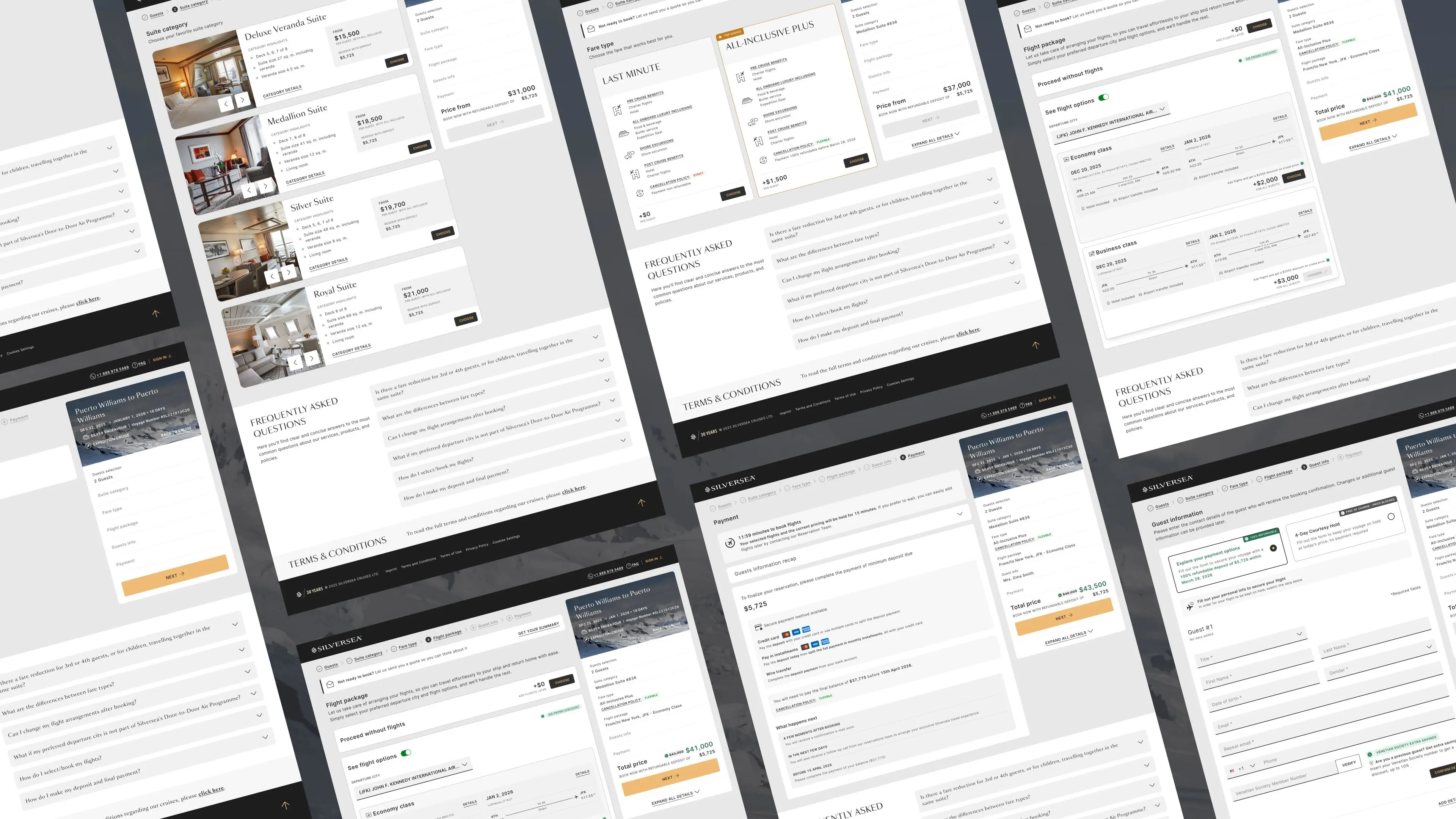
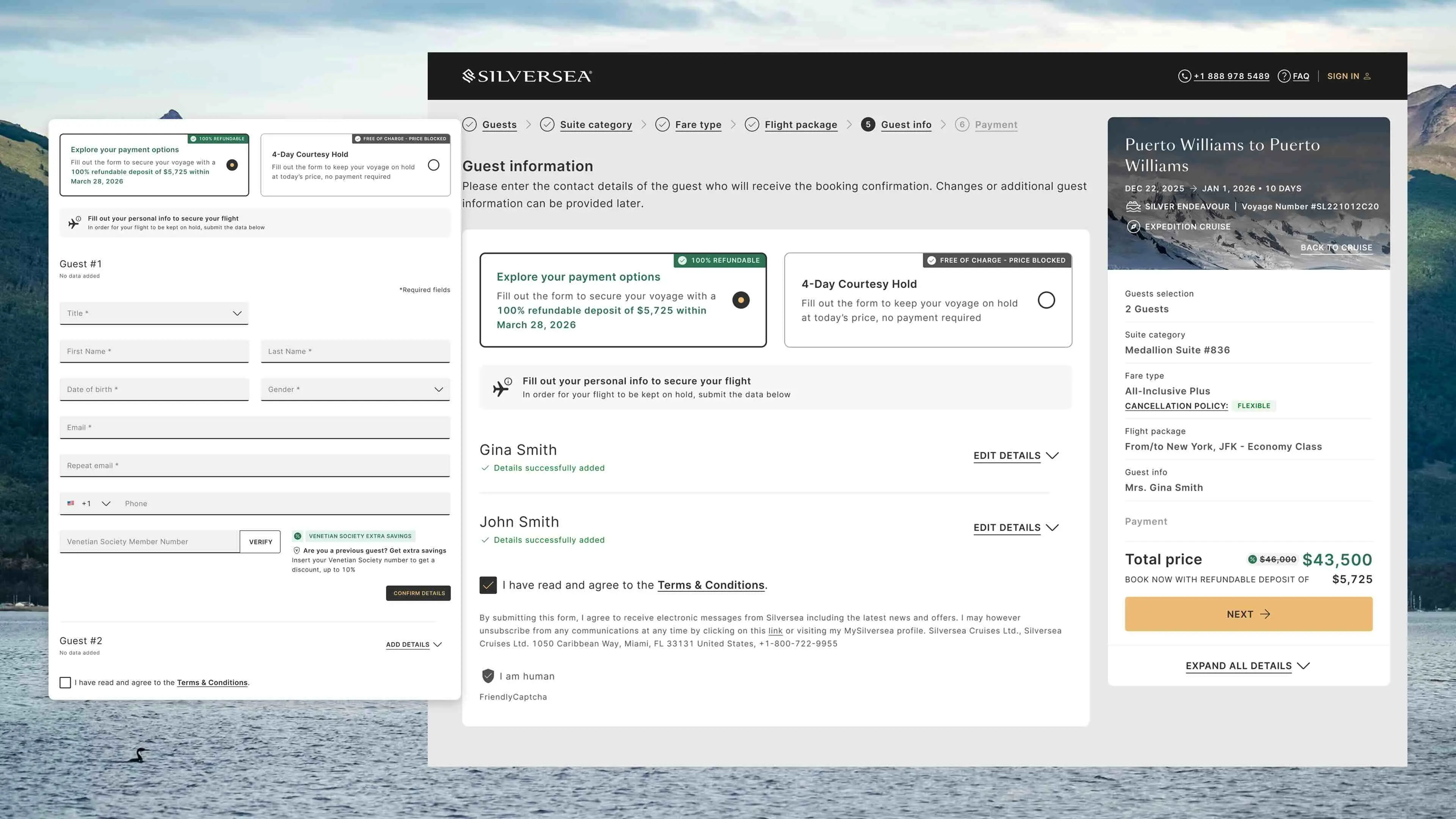
Luxury cruises involve a web of variables—dates, itineraries, suites, inclusions, promotions, and guest preferences. The new cruise configurator translates this complexity into a guided, step‑by‑step flow where users can see the impact of their choices in real time.
Clear pricing breakdowns, contextual explanations, and progressive disclosure help guests feel in control instead of overwhelmed, making an online purchase of a high‑ticket product feel both transparent and reassuring.

MVP first, global by design
The configurator was conceived as the backbone of Silverseaʼs eCommerce engine but rolled out as an MVP in selected countries first. This phased approach allowed the team to validate hypotheses on user behavior, refine key interactions, and adapt to regional expectations and regulations.
Insights from early markets informed later releases, ensuring the global rollout reflected real customer needs rather than assumptions—and significantly reducing risk for such a strategic shift.

A continuous CRO engine
Conversion rate optimization was built into the project rather than treated as an afterthought. A/B tests and experiments looked at everything from step ordering and copy to comparison tools and reassurance elements. Features like suite comparison, reservation recovery, and smarter re‑entry into the funnel for returning users emerged directly from these experiments, contributing to lower drop‑off, higher completion rates, and a more resilient booking journey over time.
THE NEW EXPERIENCE IN ACTION
A configurator built for luxury decisions
The configurator acts as a digital travel advisor:
Guests can filter, explore and create itineraries, then configure their chosen cruise through intuitive steps.
Suite comparison tools surface differences in layout, inclusions, and price in a way that feels curated rather than transactional.
Visual cues, photography, and descriptive content keep the emotional promise of the voyage front and center, even in the most functional steps.
Reservation recovery and “pick up where you left off” flows ensure that pauses in decision‑making—common for high‑value purchases—do not turn into permanent drop‑offs.
Bridging online convenience and offline service
Rather than replacing offline agents, the new experience connects to them. Customers can move from self‑service to assisted service without losing their configured choices, allowing advisors to step in with context and add value instead of re‑collecting information.
This tight integration between channels reinforces Silverseaʼs positioning: a brand that brings together the best of digital convenience and human expertise, ensuring every interaction—onboard and online—reflects the same standard of elegance and care.